What Are the Challenges Facing Gender Equality in Tanzania?
Gender equality in Tanzania remains constrained by educational dropout rates, unequal land ownership, and the disproportionate burden of unpaid care work on women and girls.
Since 2012, Maji Safi Group has worked in rural Tanzanian communities to address these barriers directly, with a staff that is more than 75% female, operating across more than 100 communities, and with confirmed evidence that disease rates drop significantly among program participants compared to those who have not received their education.
This article examines the structural roots of gender inequality in Tanzania and what community-level intervention actually looks like on the ground.
Historical Foundations of Gender Disparities
The struggle for gender equality in Tanzania cannot be understood without examining its historical context. Long before colonialism, diverse ethnic groups maintained distinct gender systems that shaped women’s roles in society.
Pre-Colonial Gender Dynamics
Tanzania’s 120+ ethnic groups exhibited remarkable diversity in gender relations. The Makonde and Zaramo peoples recognized women’s leadership in economic and social spheres, while groups like the Maasai maintained strict patriarchal structures.
Colonial Disruptions to Gender Roles
European rule systematically dismantled indigenous systems through land policies favoring male ownership and education systems that prioritized boys’ schooling. These colonial legacies created structural barriers that continue to shape gender equality in Tanzania today.
Contemporary Challenges to Women’s Empowerment
Modern Tanzania presents a paradox. Significant legal progress coexists with deeply entrenched gender disparities. Understanding these contradictions is essential for developing effective solutions.
The Policy-Implementation Gap
While Tanzania boasts progressive gender equality laws on paper, enforcement remains inconsistent. Customary laws often override statutory provisions in rural areas, leaving many women unaware of their rights and unable to access legal protections that exist in name.
According to UN Women, only 44.4% of legal frameworks that promote, enforce, and monitor gender equality under SDG indicators are currently in place in Tanzania.
Education and the Menstrual Hygiene Gap
The education sector shows both progress and persistent failure. Primary enrollment approaches near gender parity, but secondary education tells a different story. While about 41% of girls transition to secondary school, only 3% complete the cycle.
One of the most direct and addressable causes is the absence of sanitary products and private toilet facilities. Without them, many girls in Tanzania miss school during menstruation, and over time, those absences compound into permanent dropout.
Maji Safi Group’s menstrual hygiene health programs provide reusable sanitary pads, period panties, and menstrual cups to girls across the Rorya, Butiama, and Bunda Districts and have opened more than 40 Menstrual Hygiene Health Clubs in the Mara Region, with 20,500 students engaged so far.
Structural Barriers to Equality
Beneath visible inequalities lie deeply rooted structural obstacles. These barriers manifest in cultural norms, economic systems, and the daily lived experience of women in rural Tanzania.
The Weight of Cultural Expectations
Traditional gender roles continue to limit women’s opportunities across Tanzania. From household decision-making to career choices, patriarchal norms shape life trajectories in ways that restrict participation in public life and economic activity. According to Afrobarometer, more than one-third of Tanzanian citizens believe that a woman running for office will likely be criticized or harassed, a sign of how deeply cultural resistance remains embedded, even where legal protections exist.
Time Poverty and the Invisible Constraint
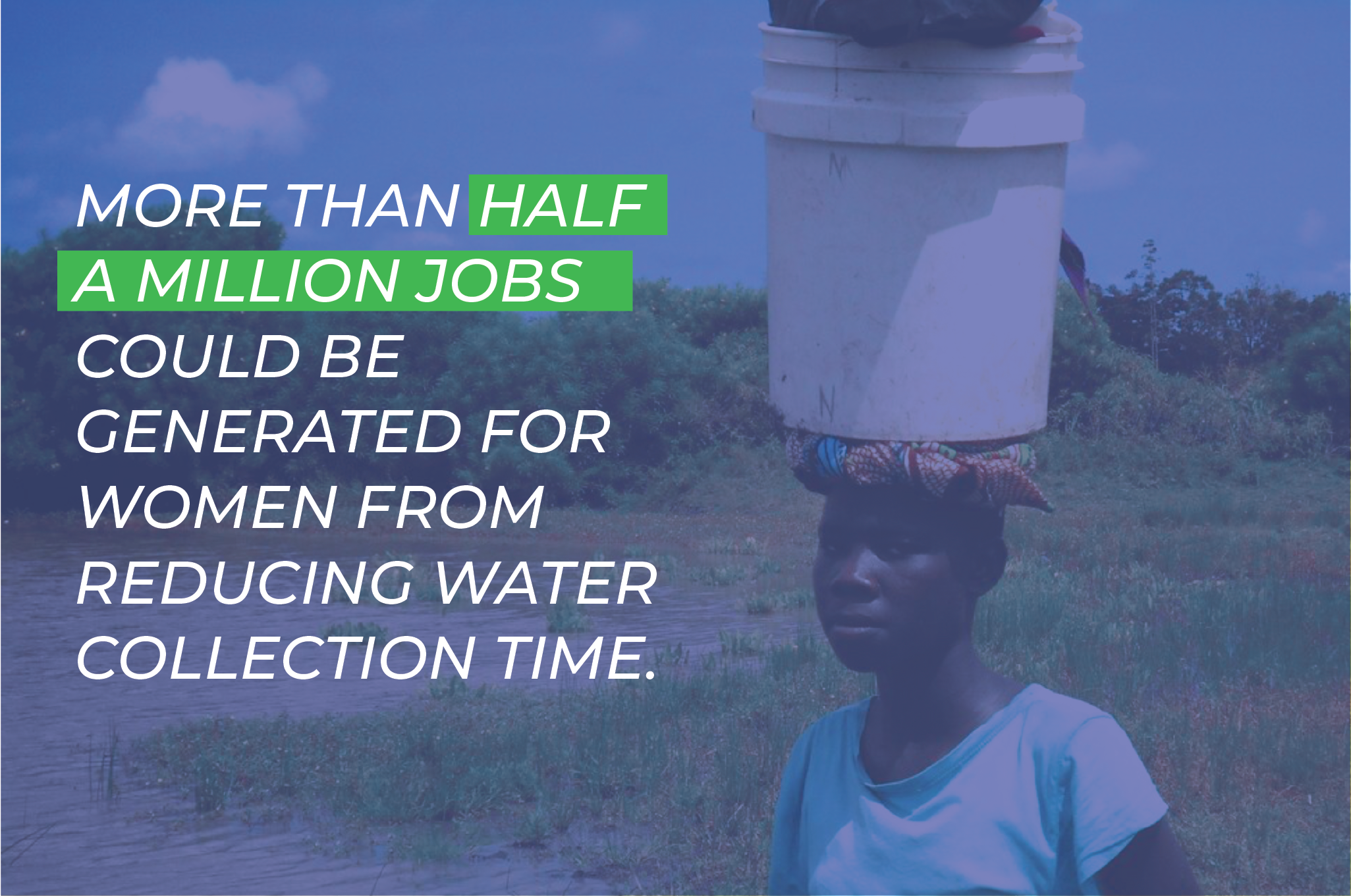
In Tanzania, women and girls aged 5 and over spend 16.5% of their time on unpaid care and domestic work, compared to 4.2% for men. Water collection, cooking, cleaning, and childcare can consume several hours per day, a hidden burden that restricts school attendance, economic participation, and community engagement.
Maji Safi Group addresses this directly through home visits targeting female heads of household, covering:
Water treatment and storage
Disease prevention and the fecal-oral cycle
Sanitation and handwashing practices
Food preparation and personal hygiene
Community Health Educators meet with families three to five times over six to ten weeks and revisit within the year to ensure new habits hold.
Economic Impacts of Gender Inequality
The consequences of gender disparity extend well beyond social justice. They have measurable costs for Tanzania’s economic development and growth potential.
The Cost of Exclusion
According to the World Bank, female wage workers in Tanzania earn approximately 88 cents for every dollar earned by men, and when women own businesses, they make 2.4 times less profit than men. Only 14% of firms have female top managers. These are not abstract statistics. They represent compounding disadvantage across generations.
Waterborne diseases like schistosomiasis disproportionately affect women and children who collect water, keeping girls out of school and women out of work. Between 2015 and 2019, Maji Safi Group screened over 25,000 residents for schistosomiasis, malaria, amoebas, and intestinal worms and confirmed through those screenings that disease rates dropped significantly among program participants compared to community members who had not received WASH education.
Sector-Specific Consequences
Gender gaps in agriculture, technology, and healthcare create ripple effects across communities. Female farmers in Tanzania have less access to productive agricultural inputs than men. Women are significantly less likely to own a bank account, a mobile phone, or a motor vehicle. Each of these gaps reinforces the next. Maji Safi Group’s 85% improvement in participant behavior, tracked through impact evaluations, demonstrates that sustained, community-embedded education produces measurable change, not just awareness.
What Progress Actually Looks Like on the Ground
Across Tanzania, the most effective advances in gender equality are not coming from policy alone. They are coming from locally led programs embedded in the communities they serve.
Breaking Stigma Through Education
When Maji Safi Group launched its Menstrual Hygiene Health program in 2013, menstruation was a taboo subject in most schools in the Rorya District. Community Health Educators created safe spaces for both male and female students to understand female health and reproductive education, a deliberate decision to bring boys into the conversation so stigma could be dismantled from both sides.
The Male Hygiene Program, launched in 2016, extended this work by empowering boys and young men to support girls’ ability to stay in school and help close the gender inequality gap. The annual Decent Girl competition invites the entire community to learn about women’s health through songs, dances, and skits and has helped significantly reduce the stigma surrounding women’s health in the Rorya District.
Community-Led, Government-Supported
Maji Safi Group works closely with Tanzania’s Ministry of Community Development, Gender, Women, and Special Groups, as well as district and regional Community Development Offices, to align programs with national priorities. In 2015, the District Education Office approved MSG to operate in all 125 primary schools in the Rorya District. More than 6,000 students attended the After School Program over its run.
Tanzania has made measurable national progress. According to Afrobarometer, the country ranked 48th out of 146 countries on the Global Gender Gap Index in 2023, up from 82nd in 2021, and women now hold 37% of parliamentary seats. But 75% of Tanzanians still believe the government should do more. The gap between policy and lived reality in rural communities remains the central challenge, and it is where ground-level organizations operate.
What are the main causes of gender inequality in Tanzania?
The main causes are unequal land rights, limited secondary school access for girls, the disproportionate burden of unpaid domestic work on women, cultural norms that restrict women’s participation in public life, and lack of access to sanitary products that keep girls out of school during menstruation.
Is Tanzania making progress on gender equality?
Yes, but unevenly. Tanzania ranked 48th on the Global Gender Gap Index in 2023, up from 82nd in 2021, and women hold 37% of parliamentary seats. In rural areas, customary laws, economic exclusion, and cultural barriers mean that legal progress has not yet translated into equal opportunity on the ground.
How does gender inequality affect education in Tanzania?
While primary school enrollment is nearly equal, only about 3% of Tanzanian girls complete the secondary school cycle. Lack of sanitary products, early marriage, and unpaid domestic labor are the primary drivers of dropout. Girls who miss school during menstruation due to a lack of facilities are significantly more likely to fall behind permanently.
Why do women in Tanzania face more health risks than men?
Women and girls bear the primary responsibility for water collection, increasing their exposure to waterborne diseases such as schistosomiasis and cholera. In rural communities, disease prevention education delivered directly to female heads of household is one of the most effective ways to reduce this disparity.
HEALTH SCREENINGS
A great public service and a metric to measure disease prevalence amongst current and potential program participants.
During the years 2015-2019, MSG conducted an annual Health Screening Campaign as a public service and a way to monitor the impact of MSG’s WASH education. Approximately 25,000 participants were tested for amoebas, intestinal worms, schistosomiasis (bilharzia), and malaria – all common water-related diseases. In cooperation with the Rorya District Medical Office and practicum students from the US, MSG screened participants and provided them with appropriate medications and educational flyers. The health screenings helped patients keep track of their well-being and provided an incentive for community members to get involved in MSG’s programs. In addition, the health screening results enabled MSG to compare the disease rates of our program participants to those of community members who had not received our education.
Ree Pads is a supplier of reusable pads to support MSG's Menstrual Hygiene Health programs.
Afya Plus
Afya Plus is a supplier of reusable pads to support MSG's Menstrual Hygiene Health programs.
ReliefPad
ReliefPad supplies reusable pads to support MSG's Menstrual Hygiene Health programs.
Saalt
Saalt is a global company that provides reusable solutions for menstruation. Their products are donated to MSG to support our Menstrual Hygiene Health programs.
AnuFlo
AnuFlo is a Tanzania-based social enterprise that manufactures reusable menstrual products. MSG utilizes AnuFlo products in our Menstrual Hygiene Health programs.
Women's Choice Tanzania
Women’s Choice is a social enterprise that manufactures and distributes low cost, affordable menstrual hygiene products – especially, reusable Salama pads.
Street Business School
Street Business School (SBS) empowers women to become thriving entreprenuers, lifting themselves and their families to a more vibrant future by teaching them tools they need to successfully start and grow microbusinesses. Several of MSG's employees are certifies SBS trainers who work with cohorts of women in the Mara region.
Swiss Midwife Project
MSG has been hosting midwifery students from the Bern University of Applied Sciences in Switzerland since 2021. The nurses come to learn and help at the Shirati KMT District Hospital’s maternity ward, while also supporting MSG’s Menstrual Hygiene Health program.
Touro University, Program of Public Health
Touro University California is a non-profit institution of higher learning and professional education with programs in Public Health. In partnership with MSG, Touro is conducting research and mapping in the Rorya District to determine the prevalence of and need for increased services in non-communicable disease treatment and education.
Shirati College of Health Sciences
The Shirati College of Health Science partners with MSG to provide field work and practicum experience to local nurses. Nurses work alongside MSG's Community Health Educators to provide community health education.
Shirati KMT District Hospital
MSG was founded as a pilot program under the Shirati KMT District Hospital in 2012. Since then, the KMT has been a seminal partner with whom MSG continues to grow and share support. Today, the two organizations especially partner on running Disease Prevention Centers and providing nutrition education as well as schistosomiasis prevention and treatment.
Project C.U.R.E.
Project C.U.R.E. is a US- based nonprofit dedicated to addressing the shortage of medical resources around the world. MSG and Project C.U.R.E. partner to provide critical medical supplies for clinics and hospitals in the Rorya District.
AllPeopleBeHappy
AllPeopleBeHappy is a US-based foundation which supports projects that address the root causes of poverty and increase prospects for happiness and better livelihoods. MSG partnered with AllPeopleBeHappy to extend female hygiene health education to the Butiama District in 2022.
mWater
mWater is a women-owned small business provider of data-driven project management. The MSG team uses the mWater platform to track project data collection, monitoring, and evaluation.
The Center for Affordable Water and Science Technology (CAWST)
The Center for Affordable Water and Science Technology (CAWST) is a Canadian charity and professional engineering consultancy dedicated to teaching people how to bring safe drinking water, sanitation, and hygiene to their homes, schools, and clinics via simple, affordable technologies. CAWST supports MSG with capacity building in a training-of-trainers model. Together, we are increasing the capacity of MSG’s staff to provide critical WASH education and training across East Africa, including in Tanzania, Kenya, Uganda, and Ethiopia.
The Roddenberry Foundation
Roddenberry is a global foundation that supports bold ideas. MSG is a proud recipient of the Roddenberry Catalyst grant.
Rotary Club of Southeast Denver & Rotary Club of Northwest Spirit
Rotary International is a member-driven organization and network made up of over 1.4 million neighbors, friends, leaders, and problem solvers who see a world where people unite and take action to create lasting change. MSG is fortunate to partner with two Rotary chapters: the Rotary Club of Denver Southeast (US-based) and the Rotary Club of Northwest Spirit (Canada-based). These two chapters have supported MSG's focus in Menstrual Hygiene Health and WASH in Health Care Facilities with multiple grants.
Grow and Know
In 2009, Grow and Know launched the very successful Vipindi vya Maisha, a book about female puberty. The book received positive responses from girls, women, mothers, teachers – even fathers and male peers. MSG’s Community Health Educators use this book as a resource in our Female Hygiene Program.
University of Colorado at Boulder
The University of Colorado is the alma mater of co-founder Bruce Pelz and home to the Mortenson Center in Engineering for Developing Communities. MSG has participated in the Center’s annual WASH Symposium since 2015 and has hosted several CU students in Tanzania. In 2016, MSG hosted professor Beth Osnes; together, we conducted research on the vocal empowerment of women.
Washington University in St. Louis
Since 2013, MSG has partnered with the Brown School of Social Work at Washington University in St. Louis by providing practicum opportunities for graduate students studying Social Work and/or Public Health. In 2017, MSG hosted Professor Carolyn Lesorogol and twelve graduate students focusing on participatory development tools.
Heatherwood Elementary School
MSG started collaborating with Heatherwood Elementary on read-a-thons in 2018. Participants spread awareness and raise contributions for MSG by recruiting sponsors for each book they read. This win-win grassroots partnership with Heatherwood promotes reading and teaches social responsibility and helping others through personal effort. The money raised has benefitted our Tanzanian youth projects and most recently the construction of a school latrine.
Posner Center For International Development
MSG is a member at the Posner Center in Denver, Colorado. The Posner Center convenes, connects and catalyzes the international development community to collaborate for greater impact. In 2018, MSG and the African School Assistance Project (ASAP) received an International Collaboration Grant from the Posner Center.
The Generous View Studio
The Generous View Studio is a privately owned meeting space in Boulder, Colorado, dedicated to spreading awareness of global issues in general and MSG’s work in Tanzania in particular. Through professionally taught art classes and informal gatherings, the studio supports the creative community in Boulder and generates revenue for non-profits.
Paul Horton Visuals
Paul Horton Visuals is a creative company focused on providing digital and print media solutions. They support MSG with video and media content.
REACH Shirati
REACH Shirati runs Tina’s Education Center (TEC) for primary school students in Shirati. When MSG started, REACH Shirati was our parent organization. Together, we have made TEC a stronghold for students to learn and grow through our programs. Today, MSG and REACH Shirati collaborate on the Binti na Shule (Girls in School) program, a mentorship program to improve girls’ performance in schools.
Friends of Tanzania
Friends of Tanzania (FOT) is a non-profit charitable organization that has provided funding to grassroots organizations in Tanzania since 1991. FOT was started by former Peace Corps workers in Tanzania (or Tanganyika at the time). FOT has supported MSG since 2018 and has provided funds for multiple projects, including an Arborloo Toilet pilot project, SAFI toilet construction, and Menstrual Hygiene Health Labs.
Beyond Our Borders
Beyond Our Borders is a group-advised fund under The Women's Foundation of Colorado. Its mission is to strengthen families and communities, while advancing and amplifying opportunities for women to reach economic self-sufficiency. BOB has supported MSG’s Female Hygiene Program.
LUSH Charity Pot
The LUSH Charity Pot offers grants to grassroots organizations that are in an optimal position to make a difference with limited resources. LUSH has been a committed partner of MSG since 2018, supporting a diversity of programs, including cholera prevention, home health visits, and WASH in health care facilities.
Tanzania Menstrual Hygiene Health Coalition
The Tanzanian Menstrual Hygiene Health Coalition is a network of Tanzanian governmental, non-governmental, and civil society organizations working to improve MHH in Tanzania. MSG was a seminal organizer of the original coalition in 2018. The mission is to increase knowledge sharing between MHH stakeholders and combine efforts to increase policies and services at the national level. Current collaborations include organizing the annual National Menstrual Hygiene Day celebration and increasing awareness of MHH issues.
Tanzania Water and Sanitation Network
TAWASANET is a network of Tanzanian civil society organizations in the water and sanitation sector. MSG has been a member of TAWASANET since 2014 and is the Zonal Coordinator for the Lake Zone. MSG participates in annual general meetings and provides advocacy and leadership in the network.
School Health Clubs
MSG started its School Health Club programming in 2013 with the mission to improve community health outcomes through hygiene and health education at the student level. To date, MSG partners with 39 schools in the Rorya, Butiama, and Bunda Districts.
WASH Health Care Facilities
MSG started its WASH in Health Care Facilities focus area in 2021 with the mission to improve community health outcomes through partnership with local health institutions (hospitals, clinics, and dispensaries). To date, MSG partners with 14 HCFs in the Rorya District.
RUWASA
MSG’s partnership with the Tanzania Rural Water and Sanitation Agency (RUWASA) is critical for implementing and growing rural water supply and access across the Rorya District. In 2024, MSG specifically launched a partnership with RUWASA, whereby the MSG WASH Hub supplies water to surrounding communities managed and operated by RUWASA.
Local Government Authorities (LGAs)
MSG works closely with LGAs to provide services at the village and community level. LGAs are paramount to gaining community access, understanding community priorities, and providing valuable services. All programs are implemented hand-in-hand with community leadership and authorities.
WASH Pillar
MSG participates in nationwide update meetings with the Ministry of Health and other WASH stakeholders on a regular basis. These meetings focus on providing updates on progress related to various disease outbreaks and allow stakeholders to share their initiatives.
HEALTH SCREENINGS
A great public service and a metric to measure disease prevalence amongst current and potential program participants.
During the years 2015-2019, MSG conducted an annual Health Screening Campaign as a public service and a way to monitor the impact of MSG’s WASH education. Approximately 25,000 participants were tested for amoebas, intestinal worms, schistosomiasis (bilharzia), and malaria – all common water-related diseases. In cooperation with the Rorya District Medical Office and practicum students from the US, MSG screened participants and provided them with appropriate medications and educational flyers. The health screenings helped patients keep track of their well-being and provided an incentive for community members to get involved in MSG’s programs. In addition, the health screening results enabled MSG to compare the disease rates of our program participants to those of community members who had not received our education.
SINGING AND DANCE GROUPS
Using cultural customs to teach WASH and empower rural youths to be change makers in their communities.
Over the years, MSG has used these dances, songs, and skits extensively to teach students and spectators how to:
avoid water-related diseases,
practice proper handwashing,
prevent fecal-oral disease transmission, and
practice proper menstrual hygiene management.
MSG no longer runs a specific Singing and Dance Program, but this effective way of disseminating knowledge about WASH, behavioral change, Menstrual Hygiene Health, etc. is still widely used in our programming.
Song and dance are of great cultural importance in Tanzania. They are perhaps the most effective medium for communicating disease prevention to a community. In MSG’s Singing and Dance Group, students learned life-saving lessons in a fun and memorable manner, developed their talents, and became community leaders. Following WASH lessons, students worked together to create songs, dances, and skits to perform for their families, friends, and community members at MSG events.
Rorya’s Got Talent
For many years, the Singing and Dance Group held annual auditions for the Roya’s Got Talent competition.
Participants wrote songs and skits and performed choreographed dances to communicate their WASH knowledge to peers and members of the community.
Once the best 10 participants had been chosen, MSG hosted a semifinal event and then a final event, each attracting over 1,500 community members.
AFTER SCHOOL PROGRAM
CHEs taught WASH and disease prevention lessons in a fun, nurturing environment. Art, games, puzzles, and other activities encouraged students to develop their creative and cognitive skills. This way, the things they needed to learn became things they wanted to learn! In addition, their knowledge trickled down to their families. Over the academic year, students learned about:
sanitation,
personal hygiene practices,
waterborne and water-related diseases,
water treatment,
the fecal-oral disease cycle,
bilharzia, and
the benefits of preventing diseases.
To enable proper WASH techniques, MSG provided schools with demonstration ceramic drinking water filters and handwashing stations. At the end of the program, our staff artist painted a large WASH-related mural to serve as a reminder of lessons learned and as an inspiration to future students.
The After School Program was one of MSG’s very first programs, started in 2013. Its purpose was to teach students about water-related disease prevention and proper WASH behaviors, so they could stay healthy and succeed in school. In 2015, the District Education Office approved MSG to teach in all 125 primary schools in the Rorya District.
Over time 6,000+ students attended this program.
MAJI SAFI CUPS
Combining disease prevention education and team sports to promote a healthy and cohesive community.
Football (soccer) is a popular pastime in Tanzania. Organized tournaments are a common occurrence, and each game attracts hundreds of spectators. This community tradition affords a unique educational opportunity.
For several years, our CHEs would organize a month-long Maji Safi Cup on a biannual basis. These tournaments also included netball matches for women and girls. Before each football or netball game, teams must attend a one-hour lesson about WASH and disease prevention. Combining athletics and education promotes overall wellness and makes lessons more memorable and thus more effective.
The winners of a Maji Safi Cup were awarded school supplies and WASH products. Although only one team was crowned as champions, all tournament participants benefited from team-building and pre-game lessons!
LEARNING TOOLS
MSG is proud of its creative and original curricula, songs, art, games, outdoor murals, and train-the-trainer programs.
Maji Safi Group’s unique learning tools have become the catalyst for healthy WASH lifestyles and disease prevention. From education on common water-related diseases and treatments to menstruation and proper handwashing, our learning tools are fun, engaging and specifically designed to accommodate the varying literacy levels among our participants.
MALE HYGIENE PROGRAM
Teaching young men and boys about male and female anatomy, puberty, adolescent body changes, and personal hygiene.
Male Hygiene Groups
The Male Hygiene Program began in 2016. It empowers boys and young men to respect themselves, girls, and women and lead a culture of change. The program also helps young men be part of the movement to break the stigma and silence around menstruation, help girls stay in school, and close the gender inequality gap.
FEMALE HYGIENE PROGRAM
Menstrual Hygiene Management in Tanzania
Though all residents face WASH issues, it is necessary to look at the situation through the lens of gender in particular. In Tanzania, female hygiene has traditionally been a taboo subject, and most schools lack adequate facilities for young women. Without access to proper sanitary materials and fearing ridicule for bloodstains on their skirts, many girls miss school during menstruation. Lower attendance rates severely limit academic potential and contribute to a cycle of disempowerment. Maji Safi Group, through our work to promote public health, seeks to establish a more comprehensive approach to menstrual hygiene management in Tanzania. We lift the stigma around female hygiene to empower girls and help them reach their full academic potential and become strong leaders.
Together Women Rise
Together Women Rise is a powerful community of women and allies dedicated to achieving global gender equality. They have hundreds of local chapters across the U.S. where members learn about and advocate for gender equality issues, give grants to organizations that empower women and girls in low-income countries, and build a community to forge meaningful connections that increase strength and collective impact. Together Women Rise states that:
Every woman deserves the fundamental human right to live freely and pursue her dreams.
We believe that gender equality is achievable, and that determined women together in a community can achieve anything.
We know big changes are possible when we see the innovative, women-led work that’s making a difference in countries all over the world.
Together Women Rise has funded MSG’s Menstrual Hygiene Health initiatives, especially bringing menstrual cups to the Mara Region to give girls access to a convenient and environmentally friendly option and gauge community accept of this product.
Influencing Menstrual Hygiene Management in Tanzania (MHM)
MSG’s Female Hygiene Education Program is one of the biggest in the Lake Victoria Zone and is recognized as a leader in MHM education in Tanzania. We continue to expand awareness and education on this vital subject. As a result, MSG has become a prominent member of the MHM Task Force in Tanzania and often collaborates with national research initiatives with partners, such as UNICEF, the National Institute for Medical Research (NIMR), and the University of Dar es Salaam. MSG has also been featured in MHM films made in Tanzania and is proud to bring the interests of MHM stakeholders in the Lake Zone to national forums. We hope to continue contributing to the significant progress the MHM sector is seeing in Tanzania.
Female Hygiene Groups
Young women, ages 11-18, meet with CHEs in after-school groups to learn about female hygiene, health, and puberty. All groups, as well as girls from surrounding communities, are also invited to attend Saturday meetings at MSG’s office. The girls:
learn about female health,
share stories,
seek advice, and
engage in peer-to-peer education.
Participants also receive reusable sanitary products to promote proper hygiene and prevent absences from school. MSG strives to offer several different options, such as reusable pads, period panties, and menstrual cups.
The Decent Girl Competition
Group leaders and participants in our Female Hygiene Program host an annual Decent Girl competition. The entire community is invited to attend to learn about female health issues via songs, dances, and skits. Prominent community members judge the event and select a winner based on her ability to teach peers and the community about:
female leadership,
confidence,
menstrual hygiene, and
puberty.
The winner of the Decent Girl competition is honored and awarded school supplies and feminine hygiene products. The Decent Girl competition, dinners, and group meetings instill confidence in young women and promote understanding throughout the community. Topics of female health have become much less stigmatized in the Rorya District, and girls are realizing their full potential as students and young leaders.
COMMUNITY OUTREACH
Interacting with the community and spreading WASH awareness to every age group.
Participating in one’s community is crucial to bringing about positive change. To be heard, one must first be seen.
CHEs organize and host activity days to establish a presence and promote change in their community.
Youth Field Days
Games, art projects, snacks, and song and dance performances draw hundreds of children and community members to each event. The activities promote WASH behavioral changes in community youths who pass their newfound knowledge on to their families.
Food Safety
CHEs train restaurant owners and employees in the WASH behaviors needed to keep food and customers safe from disease. They periodically inspect the restaurants and certify those that meet sanitary and hygienic standards, enabling restaurants to market themselves as serving safe food and community members with the information to judge the condition of a restaurant.
Government Collaboration
MSG’s partnership with all levels of government has continued to grow since 2015, when we collaborated on responding to cholera outbreaks (2015 and 2016). Beginning in 2021, we strengthened our collaboration on WASH in Health Care Facilities and Menstrual Hygiene Health. We also coordinate with various government departments to commemorate international events, such as World Water Day, Sanitation Week, Global Handwashing Day, etc.
Local Market Days
People of the Mara Region gather on market days to trade goods. CHEs take advantage of the large crowds by setting up Disease Prevention Awareness booths and selling crucial WASH materials, such as WaterGuard chlorine tablets for water treatment.
Shops and Salons
CHEs train shop owners and hairstylists in WASH, disease prevention, and health promotion. This education spreads awareness about the importance of trash disposal and environmental cleanliness and empowers small business owners to create a network of disease prevention and WASH advocates.
Schistosomiasis Campaigns
Doctors and nurses from the Shirati KMT District Hospital periodically conduct testing and treatment for the potentially fatal disease schistosomiasis at health care facilities and community centers. MSG plays a key role by providing important health information about the transmission and prevention of the disease.
Tanzanian Government
MSG works closely with the Tanzanian government at all levels: district, regional, and national. Relevant offices include Community Development Offices (district and regional), Medical Office (district and regional), Education Office (district and regional), Health Office (district and regional), Ministry of Health (national), Ministry of Education (national), and Ministry of Community Development Gender, Women, and Special Groups (national).
HOME VISITS
Community Health Educators
For these reasons, CHEs meet with primarily female heads of households to assess their family’s WASH situation. Lessons are tailored to the specific needs of each family, but general topics include:
the economic benefits of preventing diseases,
water treatment and storage,
toilet use,
handwashing,
fecal-oral disease cycle,
food preparation and storage,
personal hygiene,
bilharzia, and
other neglected tropical diseases.
Delivering WASH knowledge to doorsteps.
In Tanzania, women are typically in charge of WASH-related activities such as, water fetching, cooking, cleaning, and bathing. This makes them the most crucial stakeholders in disease prevention. Educating women empowers them to become change makers in their homes and leaders in their communities. Our CHEs visit individual families to inspire action and transform communities—one home at a time.
Visits to a home are prioritized based on:
interest,
family size,
number of young children,
neighborhood disease rates, and
local government input.
Family Meetings
Based on initial assessments and rates of progress, CHEs meet with families three to five times over six to 10 weeks. Within the following year, CHEs will revisit families to ensure that good habits are sustained. Home Visits provide each household with equal attention and access to life-saving information. They also foster personal relationships between CHEs and participants. If residents have any questions following the visits, they know there is a friendly face or hotline ready to help. Building trust, confidence, and community is the way to stop disease from continuing.